Last updated November 20, 2026
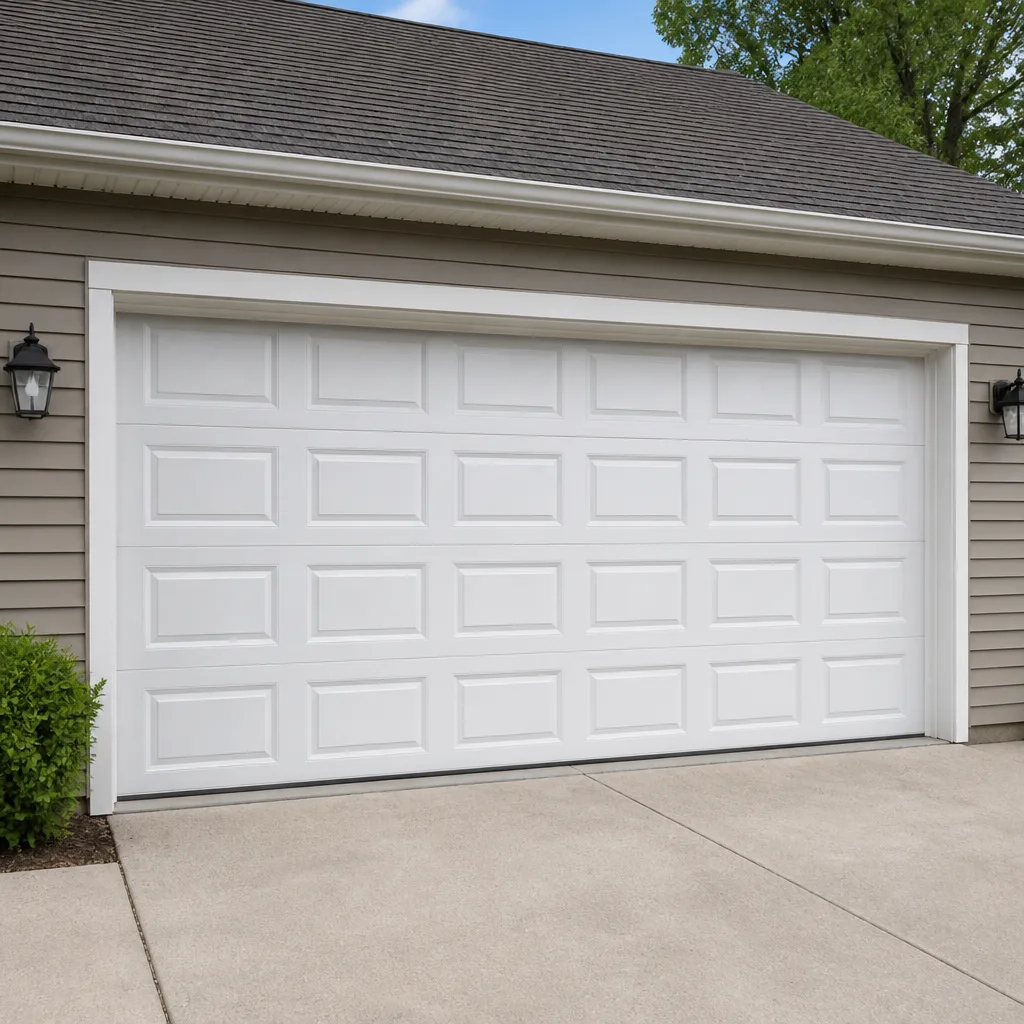 Raised-panel steel
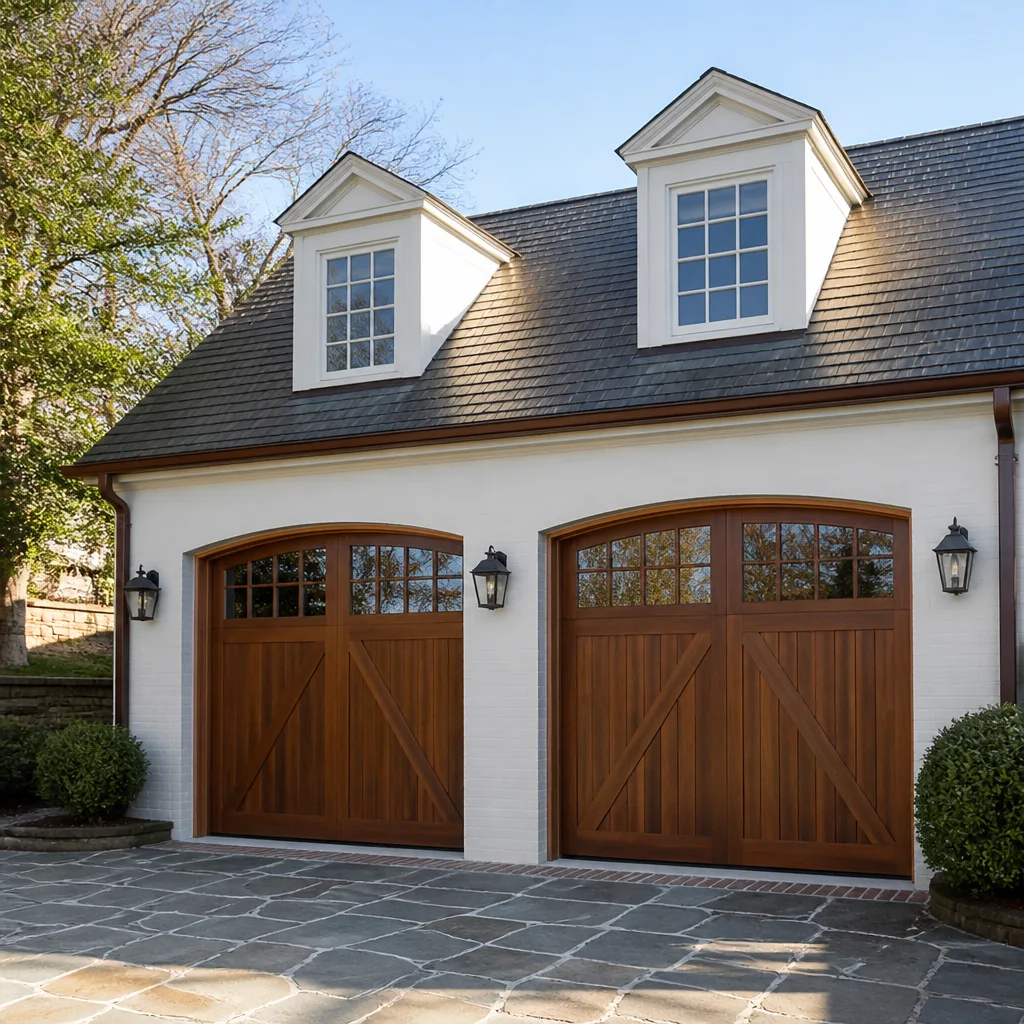 Carriage house
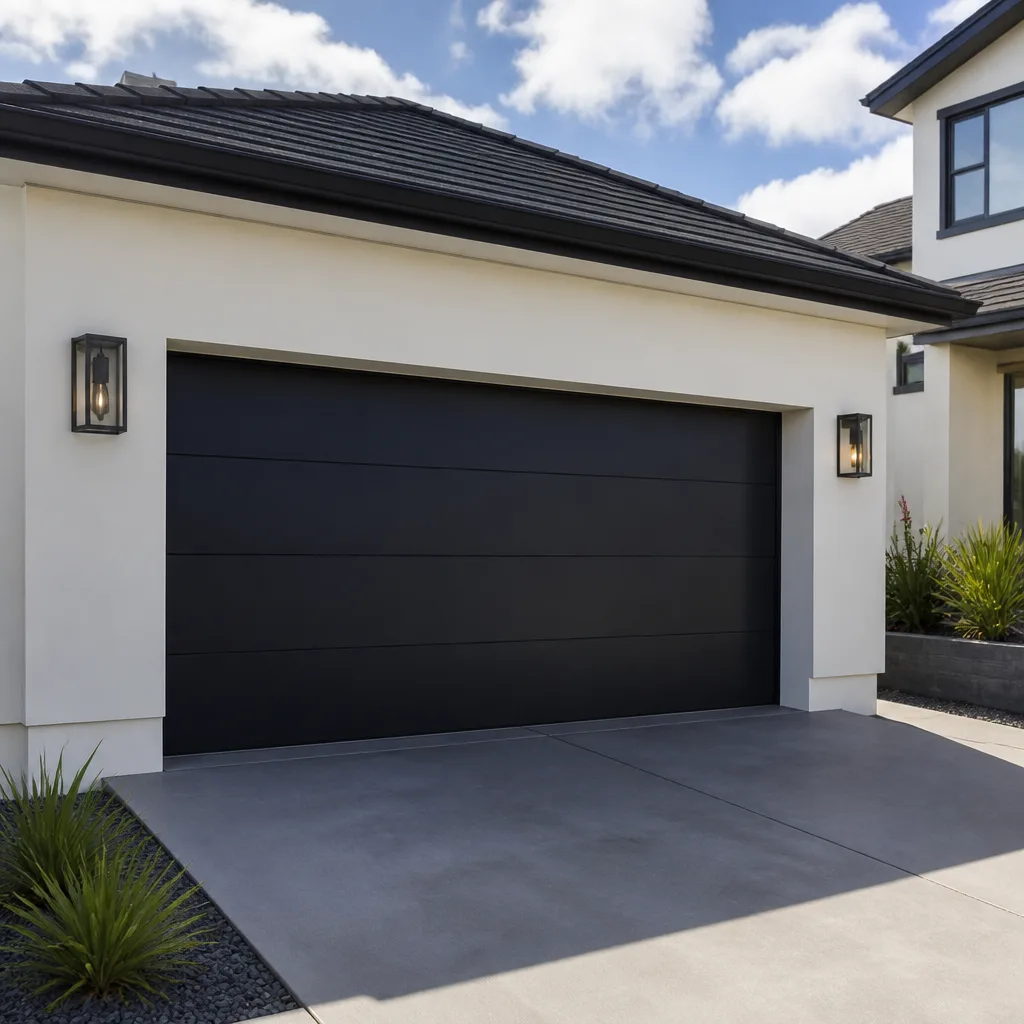 Modern flush
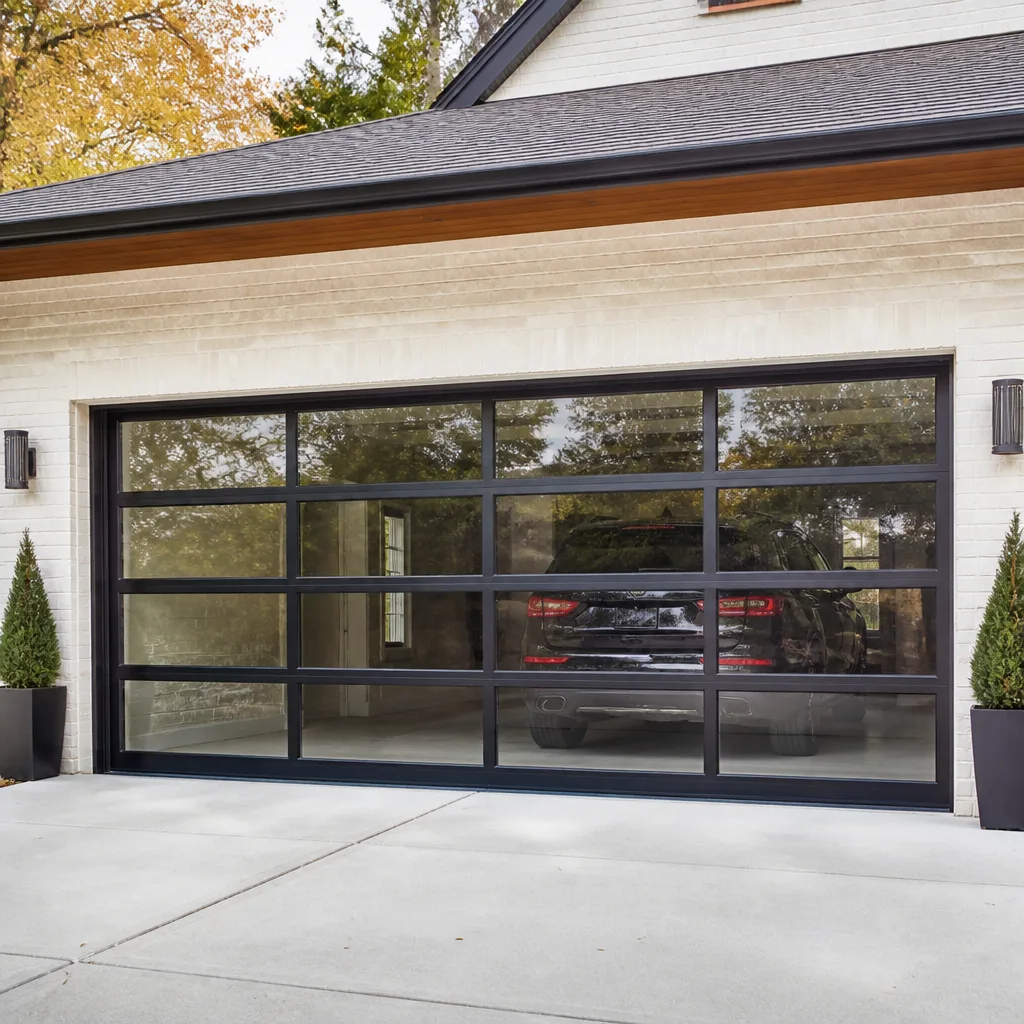 Full-view glass
 LiftMaster openers
 Chamberlain openers
Full 25-point door and opener safety check with every visit - springs, cables, rollers, tracks, and your LiftMaster or Chamberlain opener included
You get a price before we start. It does not change when the pro arrives.
Get your free estimateHow to Hire a Garage Door Contractor in Plantation: A Step-by-Step Guide
The contractor who quoted you $200 less might not know that your LiftMaster 8550W has a Logic Board 2.0 incompatibility with certain third-party springs. A specialist does. Most homeowners hire a garage door contractor the same way they hire any handyman – price first, everything else second – and that ordering is exactly backwards. In this guide, we’ll show you what separates a true garage door specialist from a multi-trade outfit that does doors on the side, the five verification steps to complete before anyone quotes you a number, the questions that reveal diagnostic depth in five minutes, and the red flags that show up in quotes around Plantation. By the end, you’ll know how to compare bids on substance instead of sticker price, and why that distinction costs or saves money on every job.
Quick Answer
To hire a garage door contractor in Plantation, verify the company’s license and insurance through the Florida DBPR, confirm it specializes in garage doors rather than treating them as a sideline, and ask brand-specific diagnostic questions about your actual opener and door system. Get at least two written, line-item estimates and confirm the price is agreed before any work starts. A true specialist answers those questions from experience with your system; a generalist guesses.
Styles & brands we work with
- Raised-panel steel
- Carriage house
- Modern flush
- Full-view glass
- LiftMaster openers
- Chamberlain openers
Table of Contents
- What Makes a Garage Door Contractor a True Specialist?
- The Five License and Insurance Checks to Do First
- Why Brand-Specific Expertise Matters More Than You Think
- Questions That Reveal Diagnostic Depth
- How to Read a Garage Door Quote
- Red Flags in Quotes and On-Site Behavior
- What Garage Door Work Typically Costs in Plantation
- Safety: When You Should Never DIY
What Makes a Garage Door Contractor a True Specialist?
A true garage door specialist works on garage doors as the only trade, not as a sideline bolted onto plumbing, HVAC, or general handyman work. That single focus is the thing most homeowners overlook in the first five minutes of a phone call, and it’s the strongest signal of whether you’ll get the right fix for your specific system.
Here’s how to tell the difference without visiting a single office.
- Their answers are specific. A specialist knows that a Craftsman opener from the mid-2000s behaves differently under load than a current LiftMaster, and explains why. A generalist speaks in generalities about “the motor” and “the springs.”
- They cover the full system. From spring to opener, a dedicated contractor handles the mechanical side (springs, cables, tracks, panels) and the smart/opener side (LiftMaster, Chamberlain, Genie, Craftsman) in one visit. Multi-trade outfits frequently subcontract one half of the job to someone else.
- They have a clear diagnostic process. Real specialists ask about cycle count, age of the door, and whether the opener was replaced recently. That last question alone screens out half the contractors you’ll talk to.
- They don’t chase unrelated work. If a company’s van advertises gutters, decks, and garage doors, the door is not the center of their business. That matters when a Raynor door needs a panel replacement matched to a discontinued profile.
In Plantation, where thousands of homes were built across the 1990s and 2000s with standard-panel doors and builder-grade openers, brand fluency is not a luxury. Older openers around Plantation neighborhoods often need a technician who can read the logic board, not just swap a remote battery and call it done. When you call a company, listen for whether they understand the actual system inside your garage or whether they’re reciting a script. The difference shows up in the estimate.
The Five License and Insurance Checks to Do First
Verify a garage door contractor’s license and insurance through Florida’s Department of Business and Professional Regulation (DBPR) before you accept a quote. A quick look-up on the DBPR site confirms the license is active, the business name matches the estimate, and the insurance is current. This is the step homeowners skip most often, and it’s the one that protects you from the cost of an uninsured injury on your property.
Follow these five steps in order.
- Look up the license on the Florida DBPR. Search by company name or individual license holder. Confirm the status is active and the license class matches the work being quoted. If the company cannot provide a license number when you ask, move on. A local professional is licensed and insured as their state requires.
- Ask for a certificate of insurance and verify it. Do not accept a verbal “we’re insured.” Ask for the written certificate and, when possible, call the insurer to confirm the policy is in effect on the date of your job. General liability is the minimum; ask about workers’ compensation coverage too.
- Confirm the business name matches. The name on the license, the insurance certificate, the written estimate, and the person who shows up should all line up. Mismatches are a common sign of subcontracting to an unknown party.
- Check for a local business address or verifiable phone. A phone number that reaches only a call center with no verifiable local presence makes warranty follow-up difficult. Ask where the business is registered and how warranty work is handled.
- Ask about permits for anything structural. Most cities require a permit for certain garage door and structural work, so ask your city’s building department what applies to your job. A contractor who volunteers to look into permits before the work begins is a good sign. One who says “we don’t bother with permits” is not.
None of these five steps take more than an afternoon. Every one of them protects you from a job that goes wrong with no recourse. A licensed and insured contractor expects these questions, and a good one answers them without hesitation.
Why Brand-Specific Expertise Matters More Than You Think
Brand-specific expertise matters because openers and doors from different manufacturers use different logic boards, force settings, travel limits, and safety-reverse behaviors. A technician who knows LiftMaster, Chamberlain, Genie, Clopay, Amarr, Wayne Dalton, Craftsman, and Raynor systems does not need a learning curve on your equipment. A technician who doesn’t will spend your appointment figuring out what the manual already says.
The practical effect shows up in three places.
- Diagnosis time. A LiftMaster opener with a Logic Board 2.0 or a Chamberlain with a MyQ module behaves differently from a Genie or a Craftsman when something fails. A brand-familiar technician tests the actual suspected component first rather than cycling through generic guesses.
- Parts matching. Springs are rated by wire gauge, inside diameter, and length, and a door manufacturer like Clopay or Amarr specs a specific spring weight for each model. A generalist who replaces a spring with the closest size on hand will shorten the life of the opener and the door.
- Warranty preservation. Some opener manufacturers require specific replacement parts to keep certain coverage in place, especially on the logic board and safety sensors. A brand-familiar technician knows the difference between an OEM replacement and a compatible aftermarket part.
To verify brand-specific experience, ask two questions on the phone: “Which brands do your technicians work on weekly?” and “How do you diagnose a LiftMaster 8550W that won’t close through the safety sensors?” Listen for whether the answer mentions the specific sensor alignment, the logic board, and the wall control panel, or whether it’s vague. Around Plantation, the most common installed brands are LiftMaster, Chamberlain, and Craftsman, with Clopay doors on a large share of newer homes. A contractor who can’t name those from experience will not give you the right fix for your specific system.
Questions That Reveal Diagnostic Depth
Ask these questions during the initial call or the on-site estimate. A specialist answers each one with a specific, brand-aware response. A parts-swapper gives you a generic answer that could apply to any trade.
- “What’s the first thing you check when a door reverses on its way down?” A specialist lists the safety sensors, the travel limit settings, and the force adjustment – in that order – and explains why the sensor alignment comes before the opener settings. A generalist jumps to “we might need a new opener.”
- “How do you decide between repairing and replacing a spring?” A specialist explains cycle life (typically 10,000 cycles for standard springs, 15,000 to 20,000+ for high-cycle options), inspects the wire gauge, and recommends a matched pair replacement when the other spring is near its limit. A generalist says “we always replace both.”
- “What’s the difference between a Logic Board 2.0 and the earlier LiftMaster logic boards?” If the technician can’t describe the difference on the phone in plain terms, they may not have worked on those units. This question is a diagnostic filter, and a good technician welcomes it.
- “When do you recommend a new opener rather than a repair?” A repair-first specialist names specific thresholds: chain drive failures after age, discontinued parts for an opener that’s beyond its service window, or repeated safety-sensor failures. A generalist recommends replacement on the first call.
- “What do you do if the door is out of balance?” A specialist explains that an out-of-balance door puts extra strain on the opener and will usually fail the safety reverse test. They’ll recommend the counterbalance adjustment before anything else.
- “Which brand of opener do you see most in this part of Plantation?” A local specialist will name 2 or 3 brands quickly. If the answer is generic, that’s a warning.
None of these questions are tricks. They probe for the diagnostic depth that separates a specialist from a generalist. A technician with real experience answers them without looking anything up. A technician who can’t answer them will likely default to a part swap or an upsell.
How to Read a Garage Door Quote
A good garage door estimate is written, line-itemized, and states the price before any work starts. It names the parts, the model numbers, the labor, and any permit fees separately. It doesn’t quote a single lump sum with the phrase “and all necessary repairs” buried inside it. If you can’t tell what’s being replaced, you can’t compare two bids.
Compare quotes on these five elements.
- Part name and model. “Two torsion springs, 0.218 wire, 2-inch inside diameter, 27-inch length” is specific. “Two springs” is not. Only with the part numbers can you verify the price against an independent supplier if you want to.
- Labor hours. Most reputable contractors quote labor separately from parts, or clearly state whether the price covers labor. Ask which it is.
- Disposal. Removing a broken spring or an old opener is part of the job. Ask whether it’s included and, if not, how much it costs.
- Safety test at the end. Every replacement should end with a safety-reverse test and a balance check. Ask who does it and whether it’s included in the price.
- Written price agreement. The price on the estimate is the price you’ll pay, agreed before any work starts. Ask the contractor to confirm, in writing, that the estimate is the final number and that any additional work will require a separate written approval from you first.
If a quote is vague, ask for a line-item breakdown in writing before you sign anything. A reputable contractor provides it without argument. A contractor who resists has told you something about how they’ll handle the job.
Red Flags in Quotes and On-Site Behavior
Red flags in a garage door quote usually show up in the details, not in obvious places. Watch for these.
- Vague line items. “Spring repair – $400” without part numbers, wire gauge, or whether it covers both springs. You can’t compare that to anything. Ask for the specifics or walk.
- No mention of permits on a structural job. Certain garage door work, including anything affecting the header or structural framing, may require a permit in your municipality. Ask your city’s building department what applies. A contractor who says “we don’t need a permit for that” without checking is steering you toward a code violation.
- Pressure to decide today. “The price goes up tomorrow” or “we’ll hold this number for an hour” is a sales tactic, not a service. A specialist is not trying to close you fast. They’re trying to get the right fix in place and back to their next job.
- Recommending a new opener before diagnosing the old one. A repair-first specialist will test the existing opener, describe what they found, and quote the repair before suggesting replacement. If the first recommendation is a full replacement without a diagnosis, that’s an upsell pattern.
- Quoting over the phone without asking questions. A garage door diagnosis is not a commodity. If a company gives you an exact price for a spring replacement without asking the door’s weight, size, or number of springs, they’re guessing.
- No written estimate. Every reputable garage door contractor provides a written estimate. Verbal quotes leave you with no recourse if the invoice is different.
- Unmarked vehicle or no local phone. Combined with no verifiable license, this is a sign you may not be able to reach the company for warranty work. In Plantation, the standard contractor is local and can be reached again if a follow-up is needed.
One red flag isn’t a deal-breaker. Three or four should end the conversation. The cost of a bad hire in this trade is rarely the price difference – it’s the cost of a second, corrective job.
What Garage Door Work Typically Costs in Plantation
Most garage door work in the Plantation market falls into predictable ranges, and asking for a written estimate in those ranges is reasonable. These are typical estimates, not exact prices, and the written estimate sets the final price. Every price here is for one item – one spring, one opener, one door – not a bundle.
- Torsion spring replacement: typically $180 to $340 for one spring. A matched pair is usually replaced together, so a pair typically costs about twice that.
- Opener repair: typically $150 to $400 depending on the failed component (logic board, motor, safety sensors, wall control).
- Opener replacement: typically $350 to $900 installed, depending on brand and drive type (chain, belt, screw, jackshaft).
- Sectional panel replacement: typically $250 to $600 per section, depending on door model and panel style.
- Cable replacement: typically $120 to $250 per side, depending on door type.
- Track realignment or replacement: typically $180 to $500 per side, depending on whether the track is straightened or replaced.
- Roller replacement: typically $15 to $35 per roller, and a full set usually brings the total to a range that requires a written quote.
- New door installation: typically $1,200 to $3,500 installed for a standard single-car door, and higher for custom or oversized doors. This is a measured, ordered, scheduled job, not a same-day service.
Two things move the number up: the door’s weight and profile (a two-car Clopay with a custom panel costs more than a builder-grade single), and the opener’s brand and features (a LiftMaster with battery backup and MyQ costs more than a base-model chain drive). Two things move the number down: a simple repair that doesn’t need new parts, and an on-site diagnosis that confirms a small fix rather than a full replacement.
Ask for a written estimate in the range above, then ask specifically whether the estimate is the final price. The answer should be yes, and any additional work requires a separate written approval from you before the technician proceeds. That’s the number to hold them to.
Safety: When You Should Never DIY
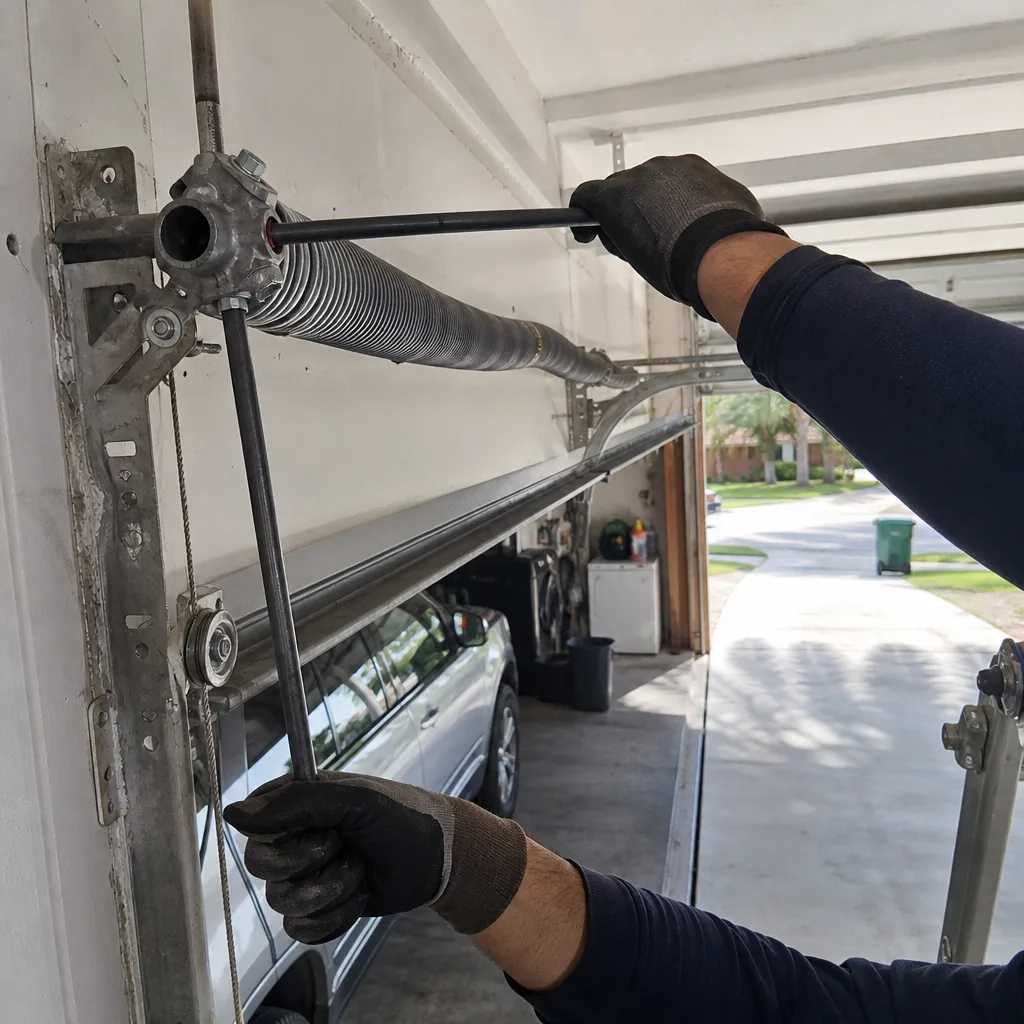
Two parts of a garage door system are genuinely dangerous and should never be worked on by a homeowner: the torsion springs and cables. A torsion spring under tension holds enough stored energy to cause serious injury or worse if released without the right tools and technique. Cables under tension carry the same risk. A trained technician uses winding bars, knows the spring’s stored energy, and follows a specific sequence to release and re-tension it safely. That’s not a step-by-step you should attempt yourself.
Electrical work on the opener’s wiring and any work on the opener’s high-voltage components is also a job for a licensed technician. Do not open the opener housing to troubleshoot a logic board unless you’re trained on that system, and never bypass the safety sensors or safety-reverse feature to “make it work” while you wait for a technician.
What you can safely check before calling: whether the door is balanced (lift it halfway and see if it stays), whether the safety sensors are aligned and clear of obstructions, and whether the wall control works. Beyond that, call a specialist. At Plantation Garage Door Repair Co, spring work is handled by technicians trained on the specific hazards, and we always test the safety reverse before we leave. Safety is not a feature to skip when the door is the largest moving object in your home.
Common Mistakes to Avoid
- Hiring on price alone. The cheapest quote is often cheap because the spring is undersized, the part is aftermarket, or the labor is uninsured. Ask what’s included before you assume. The gap between the lowest and the highest quote is usually explained by the parts, the labor, and the warranty, not by a better deal.
- Skipping the DBPR license check. Five minutes on the Florida DBPR site is the cheapest insurance you can buy. It confirms the license is active and the business is who it says it is. Skipping this step leaves you no recourse if the job goes wrong.
- Letting a generalist handle a brand-specific opener. A contractor who does doors “on the side” will not know the difference between a LiftMaster Logic Board 2.0 and its predecessor, or a Chamberlain MyQ module and its 2019 variant. Brand-specific technicians work faster and get the right fix in fewer visits.
- Accepting a quote without a written price agreement. Verbal estimates leave the door open to a larger invoice. Ask for a written quote and confirm the price before any work starts.
- Bypassing the safety sensors to “fix” a reverse problem. This is dangerous and defeats the opener’s most important safety feature. A technician diagnoses the sensor alignment instead of disabling it. Never let a contractor suggest a workaround that disables the safety reverse.
- Replacing one spring instead of a matched pair. If one spring has broken and the other is near its cycle limit, replacing only the broken one means the second will likely fail soon after. A specialist inspects both and recommends a pair when the second is close to its limit.
- Assuming a permit isn’t needed without checking. Certain garage door work, especially anything affecting the structural opening or the header, may need a permit. Ask your city’s building department before work starts rather than assuming the contractor has it handled.
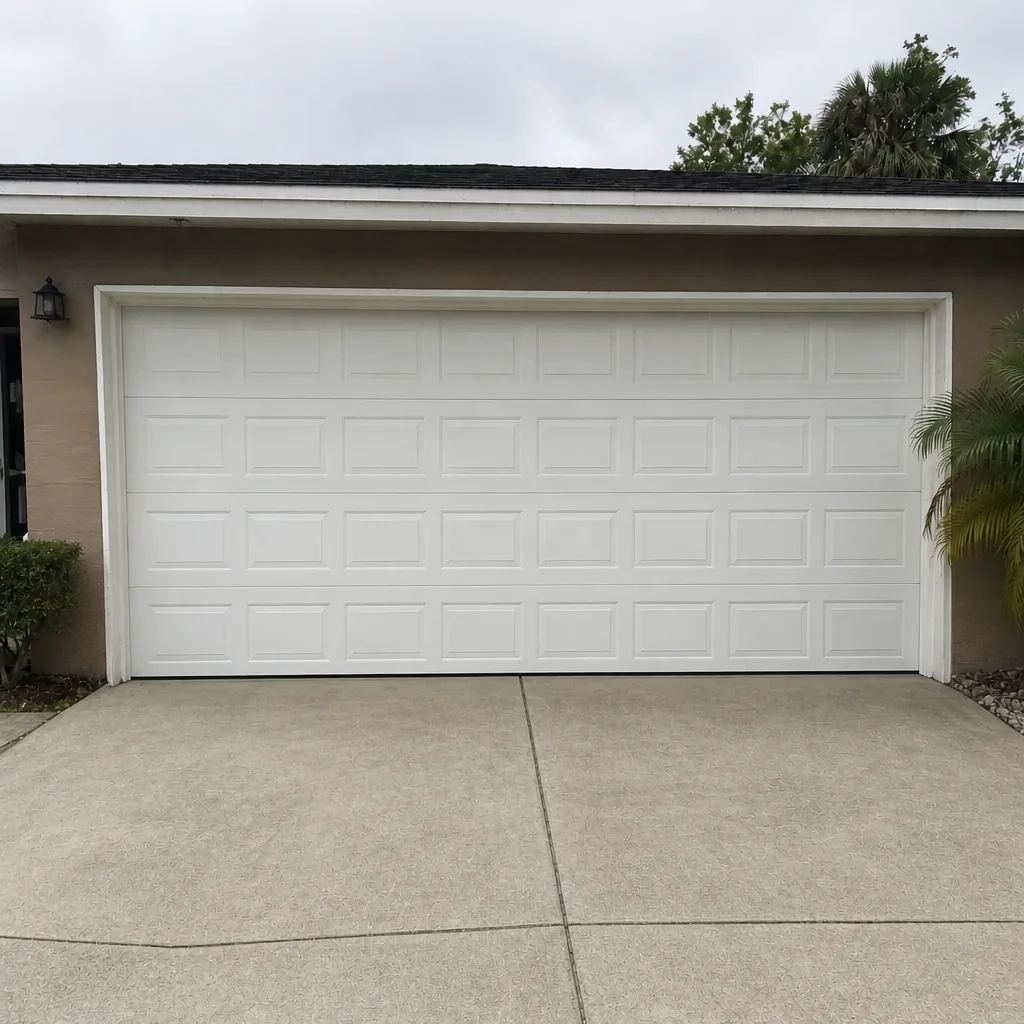
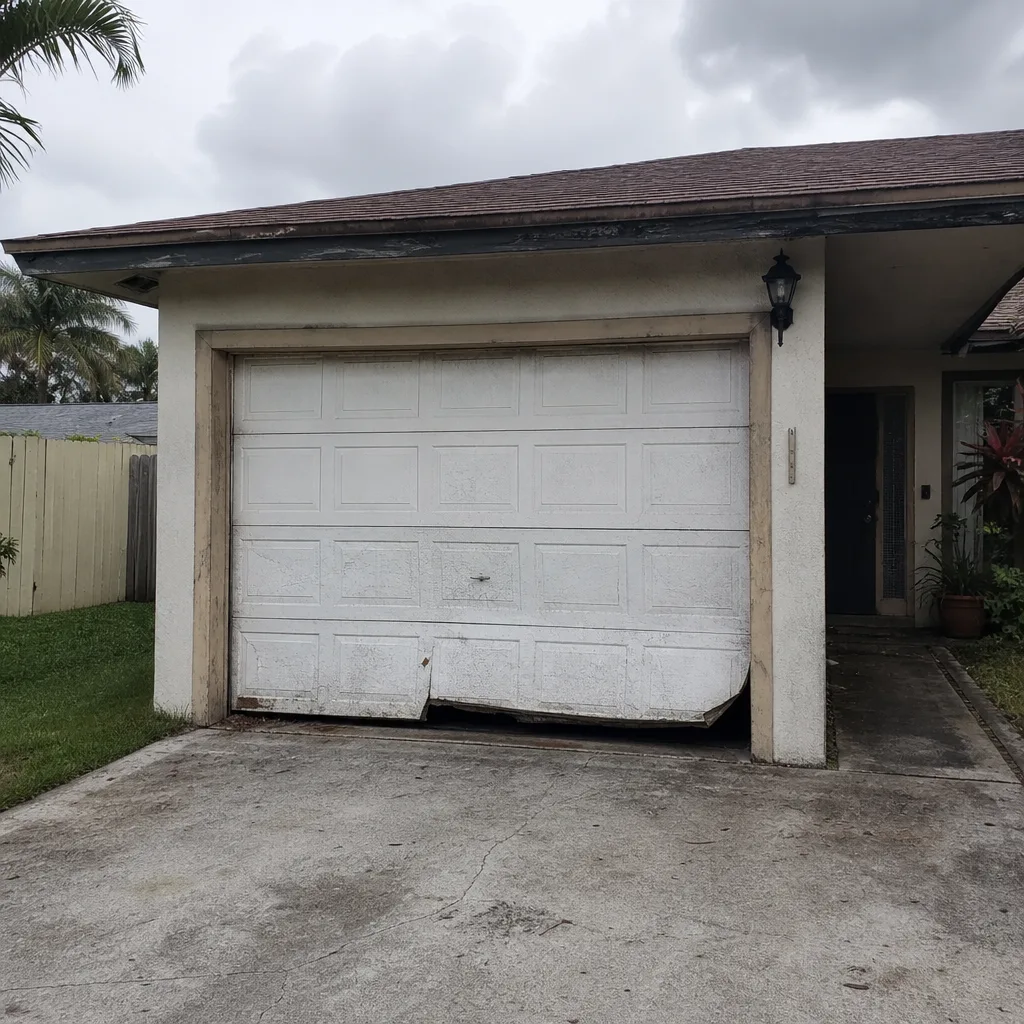
See the difference
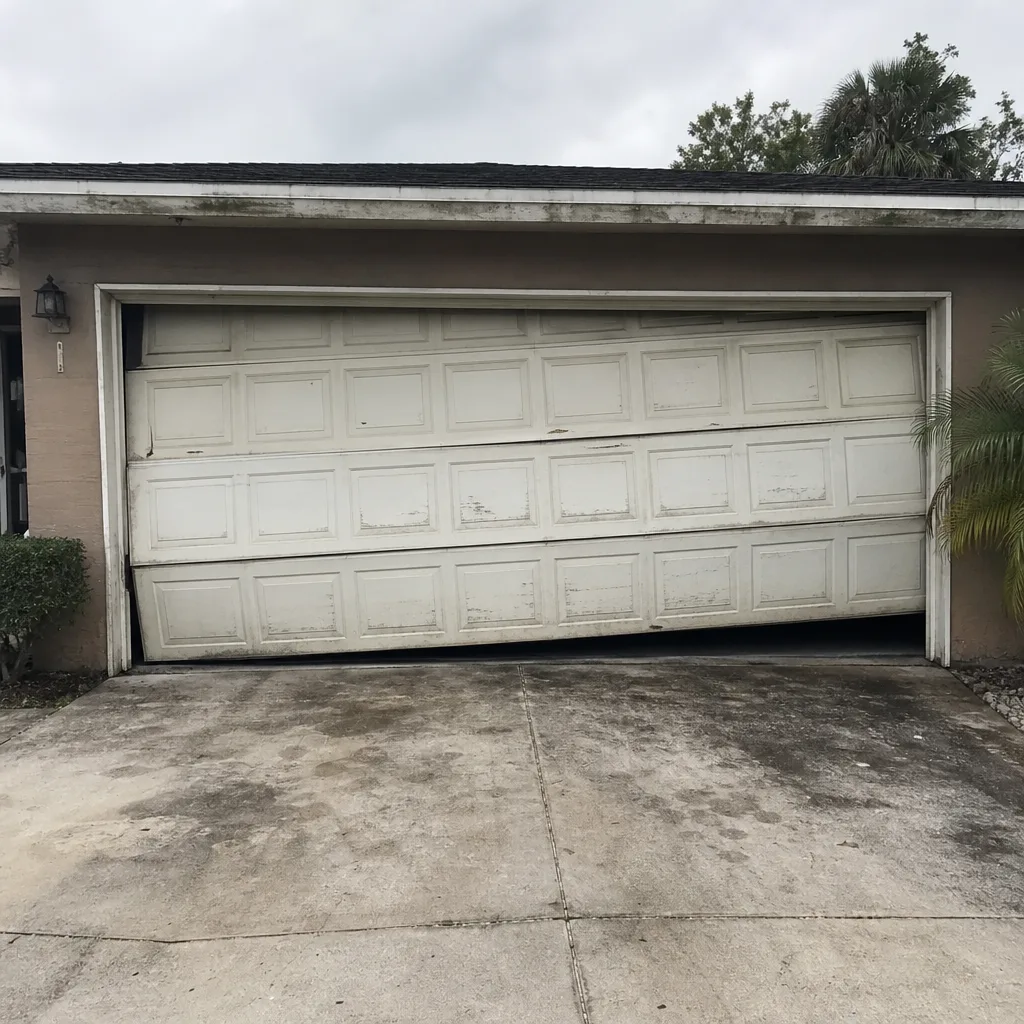 Before
 After
 Before
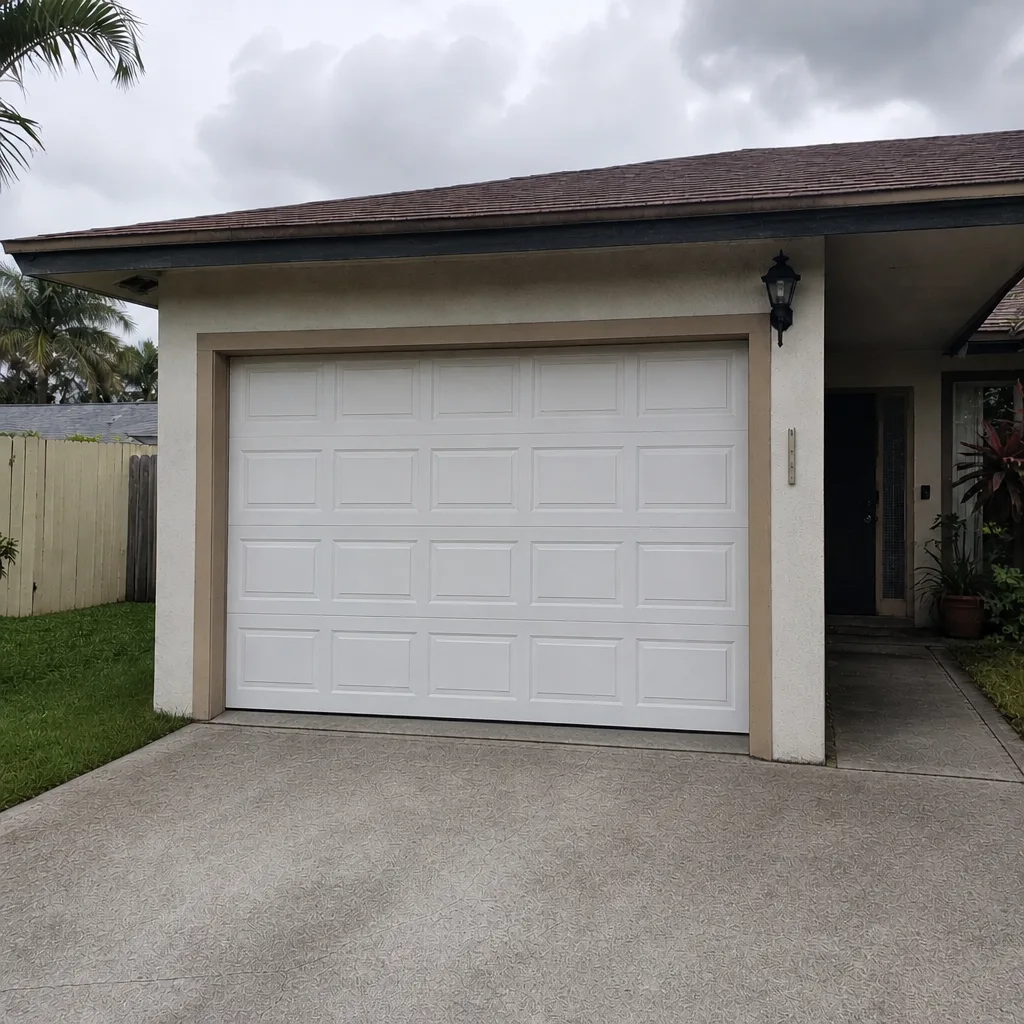 After
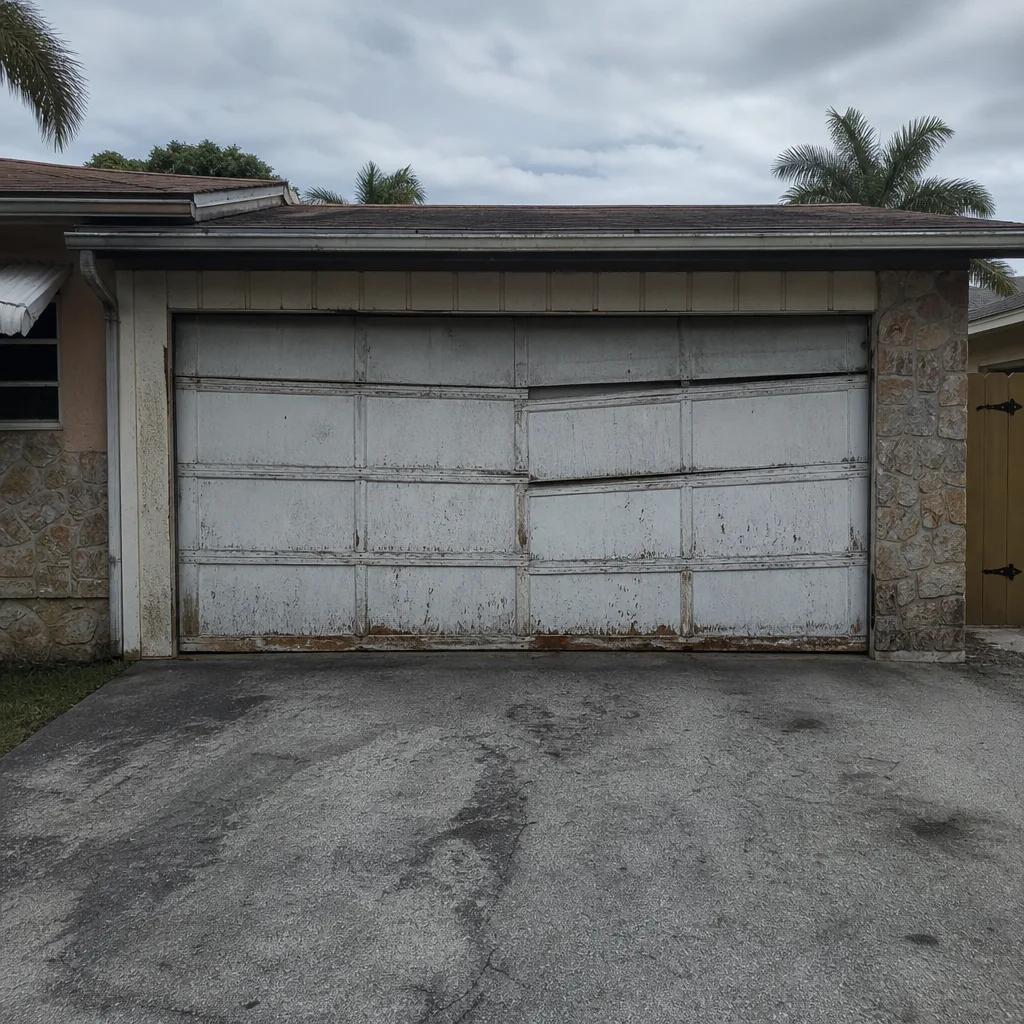 Before
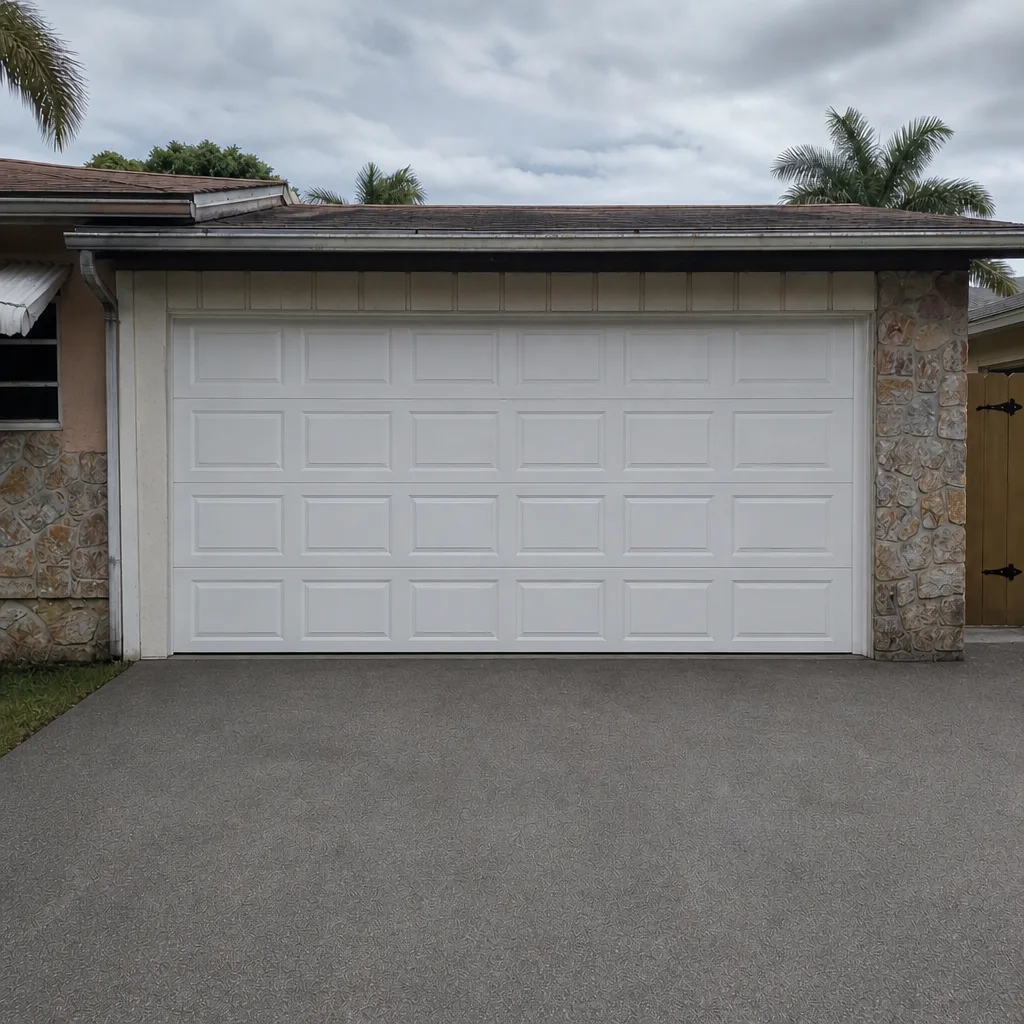 After
When to Call a Professional
Call a professional when the door won’t close cleanly, when you hear a loud snap from the springs, when the opener grinds, hums, or reverses without obstruction, or when the door is visibly out of balance (it drifts down on its own). Call when the safety sensors are misaligned and the door won’t close, or when the opener’s logic board needs a brand-specific diagnosis that a generalist can’t provide. Don’t call a generalist handyman for spring, cable, or opener logic board work – the risk of injury is real and the odds of a repeat repair are higher. For installations, call when the door’s panels are cracked, the door is shedding hardware, or when you’re ready to measure and order. At Plantation Garage Door Repair Co, we work from spring to opener and handle both the mechanical side and the smart opener side in the same visit. Free estimates in Plantation – call (833) 339-1248.
Frequently Asked Questions
Look up the company on the Florida DBPR website by name or license number, confirm the status is active, and ask for a current certificate of insurance. A licensed and insured contractor will answer these questions without hesitation. The local pro is licensed and insured as their state requires. Call (833) 339-1248 for a free estimate – we can walk you through our documentation.
Yes, spring repair and repair calls are usually scheduled for the same day in Plantation when you call early. Same-day availability applies to repair work, not to installations, which are measured, ordered, and scheduled. Call (833) 339-1248 and we’ll confirm the first available slot.
No – the written estimate is the price, agreed before any work starts. If the technician finds additional work that wasn’t visible on the initial assessment, they’ll stop, explain what they found, and give you a separate written approval before continuing. Call (833) 339-1248 for an exact quote; estimates are free.
A true specialist works only on garage doors and answers brand-specific questions about your opener and door without pausing. Ask what they’d check first if your LiftMaster 8550W won’t close through the safety sensors, and listen for a specific answer about sensor alignment, the logic board, and the wall control. A generalist gives a vague answer. Call (833) 339-1248 to talk to a specialist.
It depends on the scope of the work – structural changes to the opening or header may require a permit, while a standard spring or opener replacement usually does not. Ask your city’s building department directly, and ask your contractor whether they handle permits. A contractor who volunteers to check is a good sign.
Hiring on price alone without verifying licensing and brand-specific experience. The lower quote often reflects an undersized spring, an incompatible aftermarket part, or an uninsured crew. Ask for a written line-item estimate and verify the license first. Call (833) 339-1248 for a free estimate from a garage door specialist.
The Bottom Line
Hiring the right garage door contractor in Plantation comes down to three things: verifying the license and insurance through the Florida DBPR before anyone quotes you, checking that the company works only on garage doors and knows your specific brand, and getting a written line-item estimate that states the price before any work starts. A specialist answers diagnostic questions from experience and recommends repair before replacement. A generalist guesses. The price gap between quotes is rarely the deal – the cost of a second, corrective job is. Call (833) 339-1248 for a free estimate; our technicians have up to 15 years of experience and work on LiftMaster, Chamberlain, Genie, Clopay, Amarr, Wayne Dalton, Craftsman, and Raynor systems. Whether you need garage door repair, garage door opener repair, or garage door installation, Plantation Garage Door Repair Co is one call away.
Written by the team at Plantation Garage Door Repair Co.